offering a holistic approach to improve your wellbeing
Holistic Approach
consider all your needs
To enjoy life, there are many needs we must cater for: our own needs and maybe the needs of the beings who are dependent on us such as children.
To enjoy life, there are many needs we must cater for: our own needs and maybe the needs of the beings who are dependent on us such as children.
- If we have no shelter, no place to call home and feel safe in, it is difficult to calm our nervous system, and heal deeper wounds.
- If we do not eat nutritious food, it affects our energy levels and our ability to make proper decisions and move our body the way it is designed to move.
- If we lack sleep, it will also detrimentally affect all aspects of our life.
experiencing and making sense
The other aspect of holistic is the experiencing and the making sense.
I believe in such holistic approach to wellbeing based on my own lived experience of healing from childhood trauma using many modalities and going through many experiences.
Interested in what a healing journey may look like?
The other aspect of holistic is the experiencing and the making sense.
- I use my educator skills to pass the knowledge you may need so you can make sense and normalise what you are experiencing.
- I offer a support group to support you in your healing from childhood trauma if this is your journey and if you so choose.
In such group, you can experience healing through practising safe relationships and take these skills to the outside world in little steps. - I offer ways to safely connect at your own pace with yourself (your body, physical sensations, mind, and beyond) and with others.
I believe in such holistic approach to wellbeing based on my own lived experience of healing from childhood trauma using many modalities and going through many experiences.
Interested in what a healing journey may look like?
the many ways you can choose to heal
This relates to the opportunities I am providing you, using the skills I have developed over the years:
To explore the programs on offer:
This relates to the opportunities I am providing you, using the skills I have developed over the years:
- in coaching physical activities - tennis-based skills are the focus as it is a sport you can use to learn to move your body in a fun way and to later join social groups if you so wish. You do not need to have a passion for tennis to get involved. Just have a go and see how engaging and playing feels for you.
- in the arts: visual arts (imparting ways for you to enjoy it too), music (playing and performing on your own, with me, or in public if you so choose), and French (experiencing learning a foreign language).
These are just ways, tools, and you do not need to be extremely interested nor do you need to become proficient to actually learn and enjoy and unlock what may hold you back. The confidence you gain, the skills you learn, the healing which emerges help you improve your wellbeing. - in data management and technology - an area I worked in professionally for 25 years in Australia, consulting and training.
Gaining skills in such areas empowers you, reducing the information overload, freeing up time, and providing you with tools to improve your wellbeing. - in art therapy and counselling to help you heal the deeper wounds on your own and/or with me depending on what works best for you, at your own pace.
To explore the programs on offer:
Trauma-Informed, Person-Centered, Strengths-based Approach
Find below what I mean by using a trauma-informed, person-centered, and strengths-based approach as the basis to effectively support you to improve your wellbeing.
Trauma-Informed practice
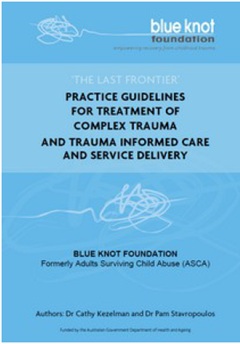
For the latest edition of Practice Guidelines for Treatment of Complex Trauma and Trauma Informed Care and Service Delivery
Digital Download (last accessed on 16 July 2026)
For the latest edition of Practice Guidelines for Treatment of Complex Trauma and Trauma Informed Care and Service Delivery
Digital Download (last accessed on 16 July 2026)
Trauma-Informed practice
It appears that there are many definitions of what it means to be a trauma-informed practitioner.
Since 2012, I have always adhered to the definition of ASCA (now BlueKnot Foundation) which was also the definition adopted by the Lifeline DV-alert trainer in 2026 when I took the course.
A trauma-informed practitioner understands and takes measure to satisfy the 5 domains of trauma-informed practice being safety, trust, options, collaboration, and empowerment.
It appears that there are many definitions of what it means to be a trauma-informed practitioner.
Since 2012, I have always adhered to the definition of ASCA (now BlueKnot Foundation) which was also the definition adopted by the Lifeline DV-alert trainer in 2026 when I took the course.
A trauma-informed practitioner understands and takes measure to satisfy the 5 domains of trauma-informed practice being safety, trust, options, collaboration, and empowerment.
- safety: an awareness that safety is paramount to enable healing; an understanding that safety has many facets (physical environment, emotional relationship with the practitioner, ...) and is a personal measure which only the client can feel within their body; a willingness to offer options so that the environment we work in is safe. For example, if indoors, providing options to sit where it feels safe and comfortable and for the client to know they are welcome to bring whatever object helps to get that sense of safety over and beyond what the environment and the therapist will offer.
- trust: an understanding that healing will not happen without trust, that trust takes time to develop, and that clients will test the practitioner to ensure they are worthy of taking the risk of trusting given that a person who has lived experience of childhood trauma has been betrayed by a person they trusted and needs to learn to trust again.
- options: support the client to experience and/or find relevant options for the concern they are trying to address.
- collaboration: offer support to make such options become reality if the client chooses so. Collaboration does not mean taking over; it means identifying what role and responsibility the client and the therapist agree to take for the option of choice.
- empowerment: Given options and with a clearly agreed collaboration, the client gains confidence in self, and gains clarity in life, hence feeling empowered, trusting that they indeed have within themselves all it takes to heal.
With appropriate time, commitment, and support healing does happen in however small steps, at a pace unique to each individual.
Person-Centered approach
Adopting a Person-Centered approach is based on the deep belief that the person, here the client, holds all the answers within; they know what is right for them given support to find such clarity within.
Carl Rogers' client-centered theory is based on the premise that given the right conditions a person has the natural ability to heal and grow.
Interested in Carl Rogers' theory?
In such setting there is an understanding that whatever is experienced by the client is neither right nor wrong; it is not to be judged; it is just accepted as it reveals itself whilst it unfolds at the client's pace.
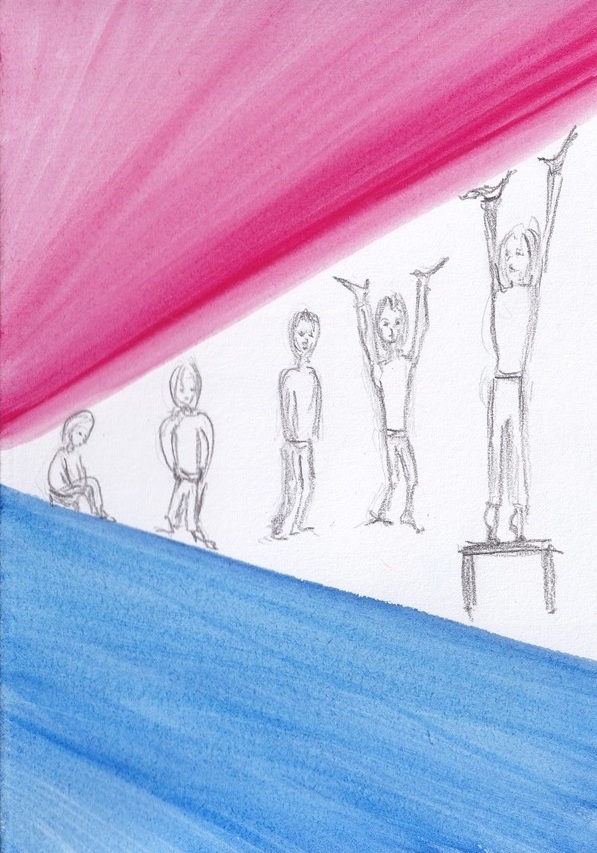
The picture supporting this section is one depicting the healing of one person over the years, slowly expanding their Window of Tolerance, that is the capacity of their nervous system to maintain a balance whilst responding to daily events. This is only one aspect of healing from Childhood Trauma. This is person-centered as it is working with the person's unique nervous system at the person's unique pace.
Adopting a Person-Centered approach is based on the deep belief that the person, here the client, holds all the answers within; they know what is right for them given support to find such clarity within.
Carl Rogers' client-centered theory is based on the premise that given the right conditions a person has the natural ability to heal and grow.
Interested in Carl Rogers' theory?
In such setting there is an understanding that whatever is experienced by the client is neither right nor wrong; it is not to be judged; it is just accepted as it reveals itself whilst it unfolds at the client's pace.
The picture supporting this section is one depicting the healing of one person over the years, slowly expanding their Window of Tolerance, that is the capacity of their nervous system to maintain a balance whilst responding to daily events. This is only one aspect of healing from Childhood Trauma. This is person-centered as it is working with the person's unique nervous system at the person's unique pace.
Strengths-based approach
Adopting a Strengths-based approach builds on the person-centered approach in that there is a recognition that the client is resourceful.
You are resourceful.
Whatever the reason for coming to therapy, even if it is childhood trauma, you would have developed many abilities in your life.
Part of the work is to identify the strengths demonstrated in your life and use them as positive resources to support further growth.
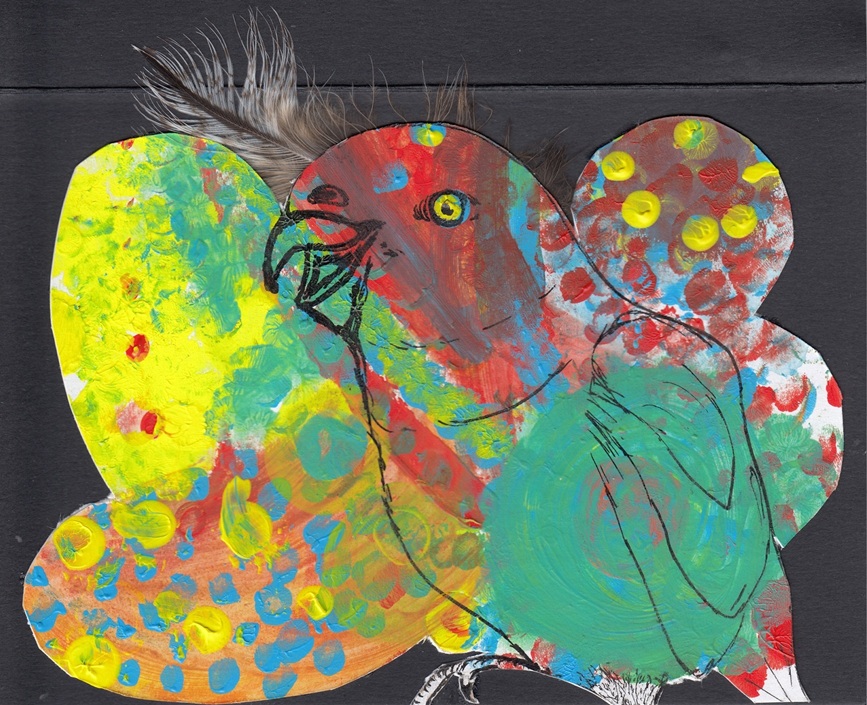
The picture supporting this section shows a parrot profiled into a random pattern of paint fingerprinted on paper. Add a real feather and this makes a strong image purely created by utilising various resources in an opportunistic fashion.
Similarly using a variety of skills brings the most unexpected positive results in one's life.
Adopting a Strengths-based approach builds on the person-centered approach in that there is a recognition that the client is resourceful.
You are resourceful.
Whatever the reason for coming to therapy, even if it is childhood trauma, you would have developed many abilities in your life.
Part of the work is to identify the strengths demonstrated in your life and use them as positive resources to support further growth.
The picture supporting this section shows a parrot profiled into a random pattern of paint fingerprinted on paper. Add a real feather and this makes a strong image purely created by utilising various resources in an opportunistic fashion.
Similarly using a variety of skills brings the most unexpected positive results in one's life.