Sodium: content limited to what we believe we need to know about sodium in our daily life, based on our experience and readings.
- What is the purpose of eating an adequate level of sodium?
- What is a reasonable daily intake of sodium?
- Where is sodium naturally found?,
- In our experience ...
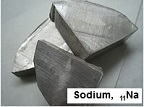
What is the purpose of eating an adequate level of sodium?
All words below in italic are quoted from the book Salt unless otherwise stated.
Man cannot survive without [...] sodium. Before salt became a trading commodity early man got all the sodium he needed through eating fish, shellfish and meat. Extract from the book: Salt (Briggs Margaret, 2013, p26)
get book details (Briggs Margaret, 2013)
Man cannot survive without [...] sodium. Before salt became a trading commodity early man got all the sodium he needed through eating fish, shellfish and meat. Extract from the book: Salt (Briggs Margaret, 2013, p26)
get book details (Briggs Margaret, 2013)
What is a reasonable daily intake of sodium?
2.5 grams of sodium a day (p81) as the recommended intake of a sedentary adult.
Such level needs to be increased when perspiration increases as perspiring translates into a loss of sodium which has to be replaced.
Book: Salt (Briggs Margaret, 2013, p26)
get book details (Briggs Margaret, 2013)
Such level needs to be increased when perspiration increases as perspiring translates into a loss of sodium which has to be replaced.
Book: Salt (Briggs Margaret, 2013, p26)
get book details (Briggs Margaret, 2013)
Where is sodium naturally found?
Typically sodium is ingested when we eat salt. Some foods however do contain sodium in various amounts.
For example, fish and seaweed contain more sodium than other food types. e.g. on a tin of tuna chunks in springwater sodium per 100g is listed as: 178mg
For example, fish and seaweed contain more sodium than other food types. e.g. on a tin of tuna chunks in springwater sodium per 100g is listed as: 178mg
In our experience ...
My current diet is based on fresh food or home-based cooking. So I do not have to consider the salt added to processed foods.
I use a container as a guide with a measure corresponding to a quantity of 6g of iodised rock salt. This would normally be my maximum quantity for the day.
When on our long and slow bike ride, I used to take extra rock salt which I suck on demand. I now carry salt everywhere I go.
How much salt is too much for me? I rely on my body to let me know: whether weakness in the legs when bike riding, or feeling a bit off, I ingest some salt and if I can't really taste it once on my tongue, I know I am lacking salt.
This seems to work for me: I used to dehydrate a lot as a toddler, also as a tennis competitor as a teenager, and up until the beginning of this new diet around 2013. Since then, using salt on a 40+ degrees temperature on a bike ride (together with regular, cool water intake) removes the dehydration risk (although not necessarily a pleasant temperature to ride in either!)
Try and find out what works for you given your health condition, activity level, and the type of processed food ie hidden salt/sodium you already eat.
If in doubt, always consult your medical team.
I use a container as a guide with a measure corresponding to a quantity of 6g of iodised rock salt. This would normally be my maximum quantity for the day.
When on our long and slow bike ride, I used to take extra rock salt which I suck on demand. I now carry salt everywhere I go.
How much salt is too much for me? I rely on my body to let me know: whether weakness in the legs when bike riding, or feeling a bit off, I ingest some salt and if I can't really taste it once on my tongue, I know I am lacking salt.
This seems to work for me: I used to dehydrate a lot as a toddler, also as a tennis competitor as a teenager, and up until the beginning of this new diet around 2013. Since then, using salt on a 40+ degrees temperature on a bike ride (together with regular, cool water intake) removes the dehydration risk (although not necessarily a pleasant temperature to ride in either!)
Try and find out what works for you given your health condition, activity level, and the type of processed food ie hidden salt/sodium you already eat.
If in doubt, always consult your medical team.